Flooring · Planning
Why New Flooring Can Fail: What Matters Beneath the Surface
A new floor can look perfect the day it goes in. Then, a few months later, something changes. A plank starts lifting at the edge. A grout line cracks. A soft spot you thought was gone comes back.
Here's the thing: the problem may not be the flooring you bought. It may be what's underneath it, or what's going on in the room. And you usually can't tell which one just by looking at the top.
Let's dig into what can go wrong under a new floor, the warning signs to watch for, and the questions to ask before anyone starts installing.

What does flooring failure actually look like?
Short answer: Raised edges, gaps between boards, cracked grout, loose tiles, squeaks, soft spots, or a floor that just feels uneven under your feet. Any of these can be a warning sign. None of them, on its own, tells you the cause.
Picture this. Your new floor looked great on day one. Now you're noticing things. A board that clicks every time you step on it. A tile that sounds hollow when you tap it. A gap between planks that wasn't there before.
What are the warning signs?
- Cupping or buckling (wood). Cupping is when the edges of a board sit higher than the middle, like a shallow dish. Buckling is when boards push up off the floor.
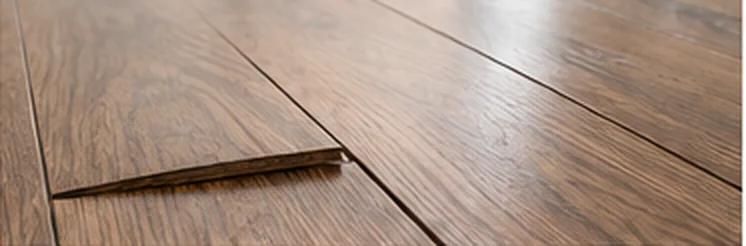
- Gaps or lifting (plank floors). Planks pull apart, or their edges peak up where they meet.
- Hollow or loose tile. A tile sounds hollow when you tap it, or rocks when you step on it.
- Cracked grout or tile. Cracks running along the grout lines, or right across the tiles.
- Squeaks and soft spots. Noises that keep coming back, or a spot that feels spongy or bouncy.
When should you stop walking on it?
If a spot feels soft, sags, or a tile is loose enough to shift, stay off it and have someone take a look. Don't try to diagnose it from photos online. The same symptom can come from very different problems.
Table 1What a symptom might mean
| What you notice | What might be happening | What to check first |
|---|---|---|
| Edges lifting or the floor buckling | Moisture, movement, or not enough room for the floor to expand | Check for dampness, and check what the product's instructions require |
| Cracked grout or tile | Movement underneath, or how the tile was installed | Check how well the floor supports the tile, and how the tile was set |
| A soft or bouncy spot | The subfloor or the structure under it is moving | Find out why it moves before anything covers it |
| Uneven seams or gaps | The base isn't flat enough, the floor is moving, or a product issue | Check how flat the base is, and read the product's instructions |
| Musty smell or dark stains | Possible hidden moisture | Find where the moisture is coming from and fix it |
A symptom is a clue, not a diagnosis. More than one cause is possible.
Clues are useful. But to make sense of them, you need to know what's actually under your floor.
What's underneath your floor, and why does it matter?
Short answer: Your floor is more than the part you walk on. It's a stack of layers, and every layer has to be strong, steady and in good shape for the top one to last.
Think of your floor like a layer cake. The frosting on top is what everyone sees. But if the bottom layer is soggy or wobbly, the frosting won't save it.
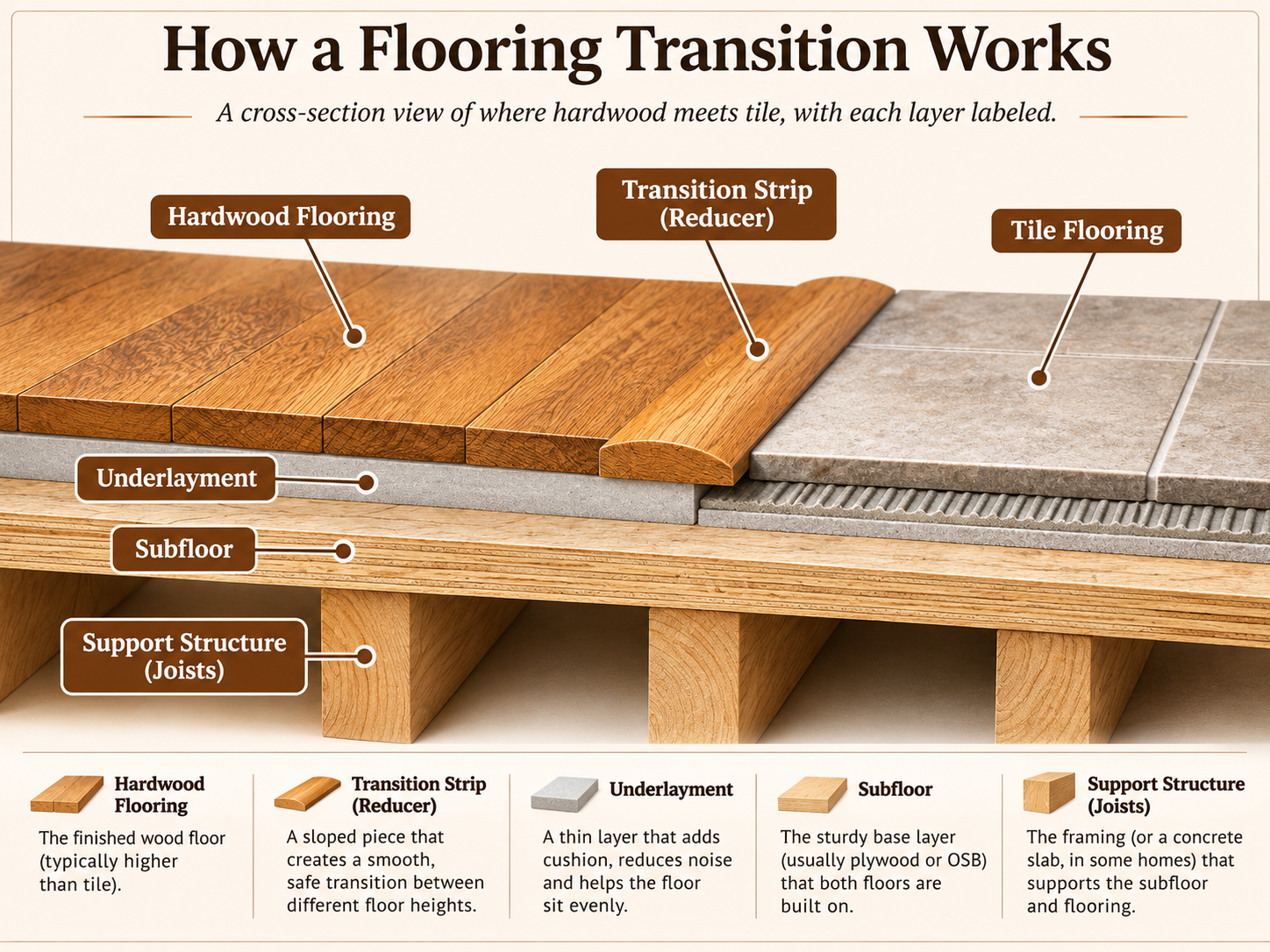
Can underlayment fix a bad base?
No. Underlayment has a job, but it's not a cure-all. It can't fix a subfloor that moves, and it can't fix a base that's holding moisture.
Why can't you just look and tell?
Because the subfloor is hidden. You often can't see its condition until the old flooring comes up. The NWFA's wood-floor installation guidelines1 put a lot of weight on a sound, flat subfloor before any wood goes down. That's why an on-site check matters so much. If you're thinking about a new floor, take a look at our flooring renovation services.
Next up: the two biggest troublemakers hiding down there. Water first.
How can moisture damage a new floor?
Short answer: Moisture can make flooring swell, lift and stain, and it can damage the layers underneath too. It can be there even when the floor looks dry.
Water is sneaky. It doesn't always show up as a puddle.
Where does the moisture come from?
- A slow leak from a pipe, toilet or dishwasher
- A damp basement or concrete floor
- A subfloor that got wet and never fully dried
- Water getting in from outside, through cracks in a foundation or wall
- Too much humidity inside the house
What are the signs?
Stains, swelling, lifting edges, a musty smell, or a spot that stays damp. These don't prove moisture is the cause, but they're worth checking. Health Canada's guidance on moisture and mould2 lists signs like stains, warped wood and musty smells, and makes one point very clear: fix the source of the moisture, or the problem comes back.
Does "waterproof flooring" make the whole floor waterproof?
Not necessarily. "Waterproof" often describes the flooring material itself. The layers under it, like a wood subfloor, can still get wet and damaged.
How is moisture checked?
For many floors, especially wood, moisture testing is part of a proper install. The NWFA guidelines1 explain why it matters. The right test, and what counts as an "OK" reading, depend on the product. Your installer should follow the manufacturer's instructions and tell you what they found.
One rule never changes: don't cover up a damp floor. Find the water and fix it first.
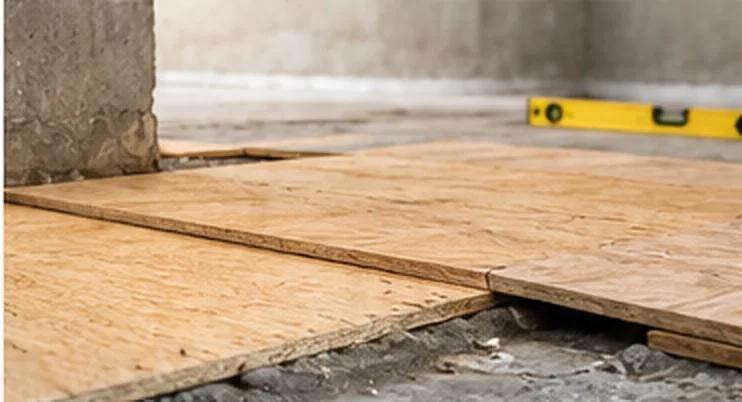
Water is one hidden troublemaker. Movement is the other.
Why do uneven floors and movement cause problems?
Short answer: Your new floor follows whatever the floor under it does. If the base bends, bounces, or has humps and dips, the new surface can crack, split or pull apart later.
Think of a jigsaw puzzle on a trampoline. The pieces can be perfect, but if the trampoline bounces, they won't stay together.
Flat, level, or trouble?"Level" means not tilted. "Flat" means no humps or dips. They're not the same thing.
Level and flat
Smooth and even. A marble would sit still.
Sloped but flat
Tilts a little, but no humps. Some products can handle it. Check the instructions.
Humps and dips
Planks and tiles can't hug the bumps. They can rock, gap or crack.
Bouncy
Dips when you walk on it. Find out why before anything covers it.
What kinds of movement matter?
- Bounce or flex. The floor dips a little when you walk across it.
- Loose boards. Subfloor panels that aren't fastened down well can shift and squeak.
- Joist movement. The beams underneath can sag or flex.
- Growing and shrinking. Many floors expand and contract a little as temperature and moisture change. That's normal, and it's why many floors need a gap around the edges.
How does movement show up in tile and vinyl?
Tile is hard and stiff. It doesn't like to bend. The Tile Council's guidance on cracked or loose grout3 lists too much flex in the floor underneath as one cause of cracked grout and tile. It also lists other causes, and says an on-site inspection may be needed to find the real one.
Vinyl plank needs a well-prepared base and room to move at the edges. Shaw's vinyl installation guidance4 says subfloor prep should never be skipped, and to always leave an expansion space around the edges. The exact gap depends on the product.
So does every type of flooring need the same prep? Not even close.
Does the type of flooring change how the base should be prepared?
Short answer: Yes. Hardwood, laminate, vinyl and tile each have their own rules: how they join, how much they move, and what kind of base they need.
No floor is the best choice for every room. The right one depends on the room, how you use it, and what's already there.
Table 2Different floors, different needs
| Floor type | What matters underneath | Question to ask |
|---|---|---|
| Solid or engineered wood | Moisture, solid support and a suitable base for that product | Were the subfloor and the wood checked for moisture? |
| Luxury vinyl plank or tile | A sound, suitable, flat-enough base and the approved install method | What prep and edge gaps does this product need? |
| Laminate | A dry, stable base and the right underlayment for that product | Is this underlayment approved for this exact product? |
| Ceramic or porcelain tile | A stiff, well-supported floor and room for movement | Is this floor built to handle tile? |
No numbers on purpose. Thickness, moisture and flatness limits change from product to product.
What's the one rule for every floor?
Follow the exact product's instructions. For wood, the NWFA guidelines1 say the manufacturer's requirements come first. That's a smart rule for any floor: when in doubt, the product's own instructions win.
Does flooring need to "get used to" the room first?
Some products need time to adjust to the room's temperature and humidity before they go down. That's called acclimation. Others don't. Shaw4, for example, says acclimation isn't required for its luxury vinyl, but the room should be climate-controlled. Don't guess. Check the instructions for the product you picked.
Still deciding what to buy? Start with our guide on how to choose flooring for each room.
Once you've picked a product, a big question comes up: does the old floor have to go?
Can you put new flooring over an existing floor?
Short answer: Sometimes. But only if the old floor is in good shape, steady and compatible, and the new product's instructions allow it.
It's tempting. Less tearing out, less mess, a faster job. But putting a new floor over an old one is a bit like painting over a stain. If the problem is still there, it can come right back through.
What can go wrong?
- Moisture hiding under the old floor
- Old flooring that's loose or not stuck down well
- Extra height that catches on doors
- Less room for appliances, like a dishwasher, to slide in and out
- Awkward bumps where the new floor meets the next room
- Old glue or layers nobody knows about
"Can" or "should"?
Just because a product can go over an old floor doesn't mean it should in your room. Shaw's vinyl guidance4 says that in many cases its luxury vinyl can go over existing flooring, as long as the surface is flat, clean and in good condition, and you follow its installation guidelines. Other products have their own rules.
Keep the old floor or take it out?Work through these in order
- 1
Inspect the old floor
Is it solid, stuck down well, flat and dry?
- 2
Read the new product's instructions
Does it allow going over this kind of floor?
- 3
Check heights and clearances
Will doors, appliances and the spots where rooms meet still work?
Decide based on what you found
Keep itEverything checks out and the product allows it.Take it outSomething fails a check, or you can't tell what's under there.
What if there's a surprise underneath?
If the old floor comes up and there's damage, it may need repair before the new floor goes in. That's a possibility, not a given. A good quote explains how it would be handled.
One warning: older floors can have layers or materials nobody knows about. Don't sand or scrape them yourself. Have them checked by someone qualified first.
Which brings us to the most useful part: what to check before any work starts.
What should be checked before installation starts?
Short answer: The room, the subfloor and the product's requirements. Colour and pattern come after that.
What should get checked?
- Condition and movement. Does the floor feel solid? Any bounce, squeaks or soft spots?
- Moisture and damage. Any stains, swelling, musty smells or signs of old leaks?
- Flatness. Are there humps or dips the new product can't handle?
- Transitions. How will the new floor meet doorways and other rooms?
- Ventilation. In rooms like bathrooms and basements, is moisture getting out?
- Compatibility. Does the base suit the product you picked?
- Product instructions. Has someone actually read them for your exact product?
What should you ask your contractor?
- Who will check the floor, and will they tell you what they found?
- What repairs are included in the price?
- If they find a problem, how will it change the price or the schedule?
What should a clear quote show?
What a clear flooring quote listsEach part on its own line, so you can see what you're paying for
Flooring material
The product itself.
Tear-out
Taking up and hauling away the old floor.
Floor prep
Fixing, flattening and readying the base.
Installation
Putting the new floor down.
Trim and transitions
Baseboards and the pieces where rooms meet.
Allowances
Only if neededHow surprises underneath would be handled.
When should you call someone now?
If your current floor feels soft, lifts again and again, or shows signs of moisture, have it looked at before you buy anything new.
No plan can promise a floor will never have a problem. But asking the right questions means fewer surprises, and a plan you actually understand.
A decision in practice · Illustrative scenario
The new vinyl floor is lifting beside the kitchen doorway. What happens next?
A homeowner might assume the planks are defective. But lifting at a doorway can have more than one explanation: the subfloor might not be flat enough, the floor might be restricted from moving, or moisture may be present.
- Find the pattern. Photograph where the lifting occurs and check whether nearby boards, door trim or transitions are affected.
- Check the installation rules. Review the exact product's requirements for the base, transitions and edge clearances.
- Inspect what is accessible. Assess movement, signs of moisture and the condition of the existing base. Further opening-up may be needed if the cause stays unclear.
- Explain the options. A small fitting correction and an extensive subfloor repair are very different jobs. The findings should determine the next step and the price.
Why this matters: A good assessment avoids charging for a cosmetic fix when the real problem is still underneath. This scenario is for explanation only; it is not a Falardeau project or a quotation from Matt.
More questions, quick answers
Can a new floor fail even if the material is high quality?
Yes. A great product still needs the right base, the right conditions and a proper install. Good material can't fix a damp or moving floor underneath.
Is a squeaky subfloor always a serious problem?
Not always. Squeaks can have different causes. But if the floor keeps moving or has soft spots, have it checked before a new floor goes on top.
Why is my new vinyl plank flooring lifting?
It could be an uneven base, moisture, movement or how it was installed. The only way to know is to have someone look at it in person.
Will underlayment fix an uneven floor?
Not on its own. Underlayment has specific jobs. It can't be counted on to fix a weak subfloor or flatten out humps and dips.
Can you install new flooring over old tile or vinyl?
Sometimes. The old floor has to be solid and suitable, and the new flooring's maker has to allow it.
Should moisture be checked before laying flooring in a basement?
Yes. Basements deserve a careful moisture check. The right test, and what counts as a good result, depend on the floor and the product you choose.
The bottom line
The best flooring decision isn't just about colour or material. It starts with the floor underneath. Moisture, movement and the wrong prep can turn a great product into a frustrating project. Before a new floor goes in, ask what's under the old one, what needs fixing, and what your new flooring needs. A clear plan heads off a lot of avoidable surprises. Not sure what your floor needs? Matt can talk you through the next steps.
Contact Matt about your flooring project